





Huge cod quota cut advised for Barents Sea
Next year’s Barents Sea cod fishing quotas should be reduced by 31%, which would be its lowest level in over two decades, according to the latest advice from the Joint Russian-Norwegian Arctic Fisheries Working Group (JRN-AFWG).
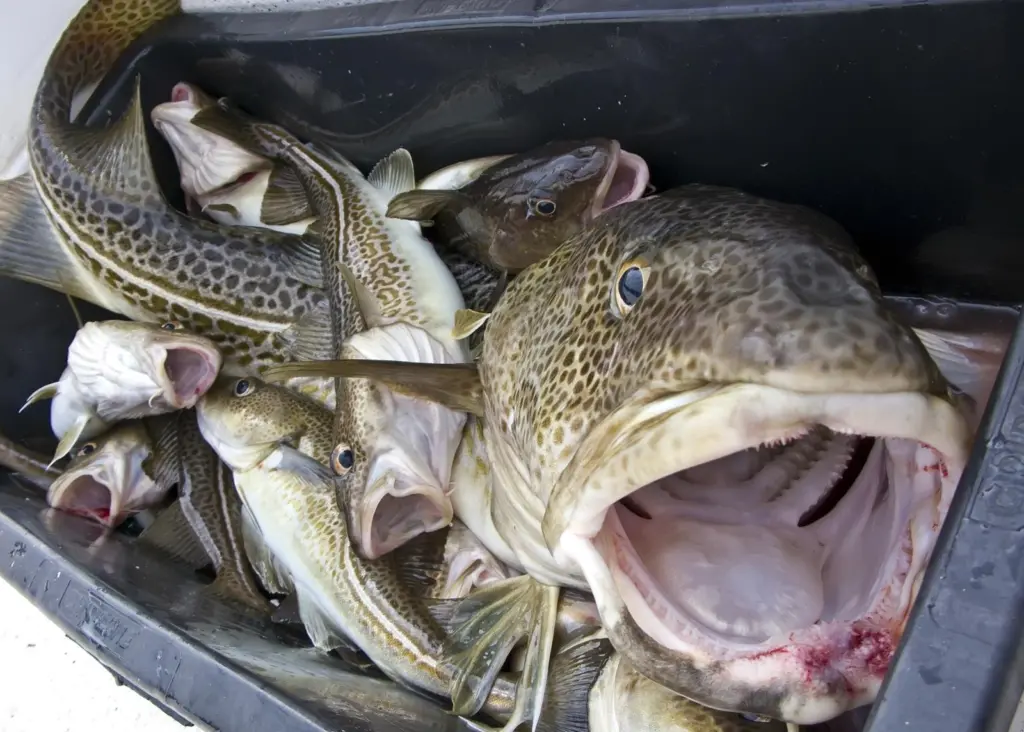
JRN-AFWG is recommending that when the Joint Norwegian–Russian Fisheries Commission management plan is applied, catches in 2025 should be no more than 311,587 tonnes. It said that in recent years, the stock size has been overestimated (particularly before the 2021 benchmark) and that it’s declining due to recruitment being below average.
Due to the temporary suspension of Russian scientists from ICES, this assessment was as in 2022 and 2023 conducted by JRN-AFWG, consisting of scientists from VNIRO (Russia) and IMR (Norway). The working group explained that while this advice has been conducted outside ICES and should not be considered as ICES advice, it has been produced following the methodology agreed at the ICES benchmark in 2021.
It also highlighted that fisheries targeting Northeast Arctic cod take as by-catch a considerable part of the total golden redfish (Sebastes norvegicus) catch, and the by-catch of the latter species is still above any sustainable catch level. It also advised the by-catch of coastal cod should be kept as low as possible to avoid overfishing of the stocks.
JRN-AFWG also recommended Barents Sea haddock catches in 2025 should be no more than 106,912 tonnes. This total allowable catch (TAC) advice is 16% below the advice and 24% lower than the TAC for 2024 due to a declining stock trend in recent years.
It explained that the 2015-2017 year-classes which have dominated catches are now being fished out, and the 2018-2020 year-classes are weak.
Early indications are that the incoming year-classes are average or above average, but for the stock to increase, it is important that these year-classes are not fished out before they mature and reach their growth potential, the working group said.
For Greenland halibut, it advises that when the MSY approach is applied, catches in 2025 should be no more than 12,431 tonnes, and catches in 2026 should be no more than 14,891 tonnes. These are lower than the advice given for 2024 due to high fishing pressure resulting in decreasing stock size.
Related Articles
 FISHERIES
 FISHERIES
 PROCESSING & REFRIGERATION