




Maritime intelligence identifies potential illegal fishing
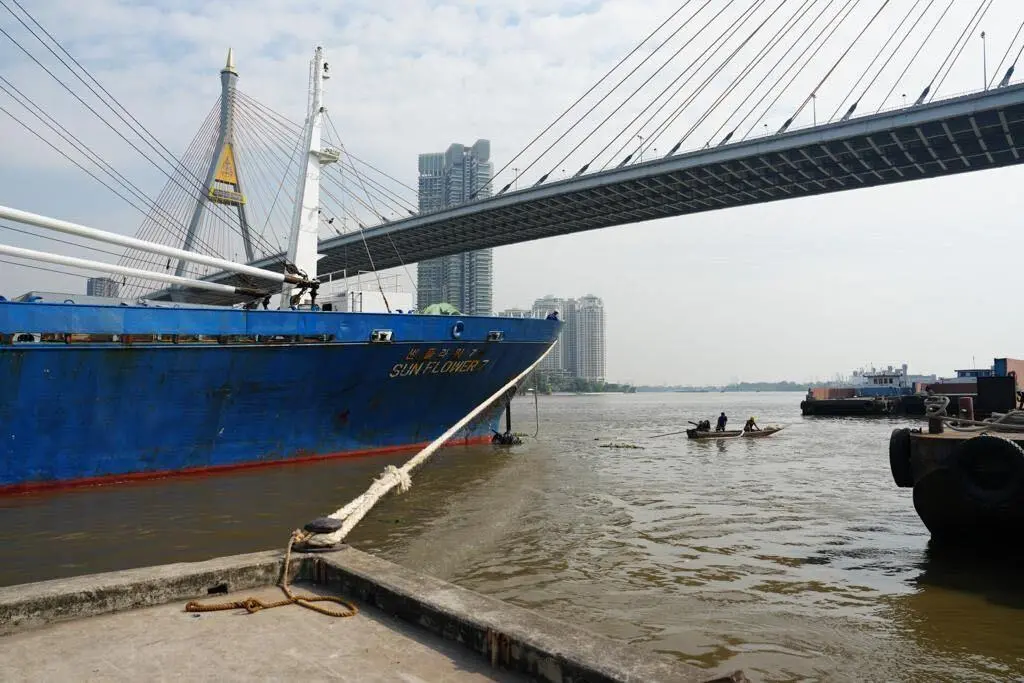
When Thai authorities prohibited the landing of more than $7 million worth of tuna from the South Korean fish carrier Sun Flower 7, they were working with data that came from New Zealand-based Starboard Maritime Intelligence.
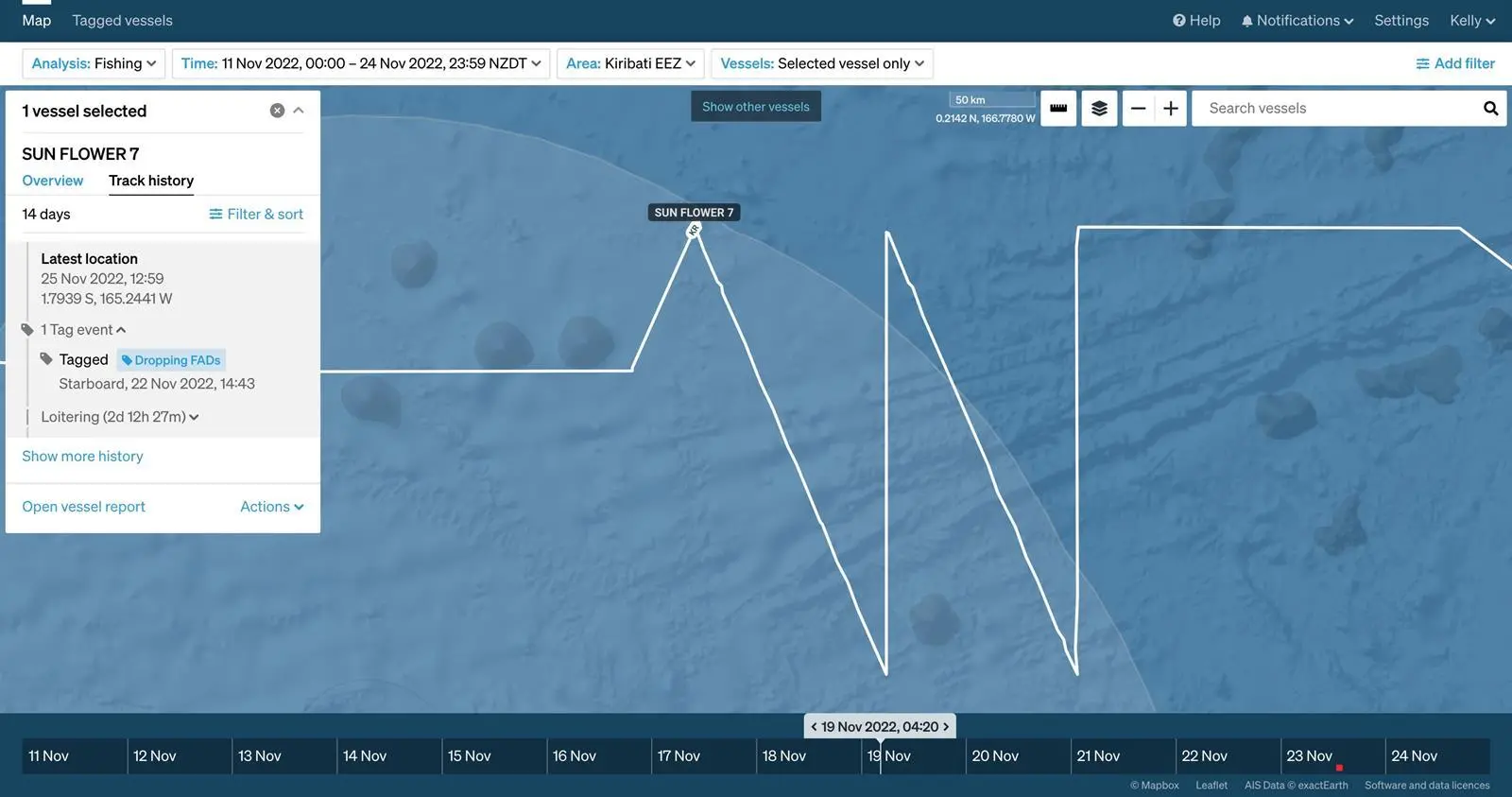
Fisheries adviser Fransisco Blaha initially identified the unusual tracks of a carrier vessel that looked suspiciously like it was deploying fish aggregating devices (FADs) in the northern part of Kiribati’s exclusive economic zone (EEZ) and the adjacent high seas – which contravenes its licensing conditions. Deploying FADs is designated by the Western and Central Pacific Fisheries Commission (WCPFC) as fishing, and while carrier vessels can ship catches and transfer crew and supplies, fishing activity is beyond their remit.
Having noticed Sun Flower 7’s distinctive tracks, Blaha passed his analysis to the Environmental Justice Foundation (EJF) and the Thai authorities, when it was clear the carrier was headed to Bangkok – and Thailand’s Port State Measures (PSM) regulatory framework kicked in. This allowed investigation by Thai authorities in collaboration with the Kiribati Ministry of Fisheries and Marine Resources Development. As a consequence, the vessel was denied port use and escorted out of Thai waters.
“Francisco found the unusual zig-zagging pattern in November last year and let us know that this could indicate FAD deployment. This is noteworthy behaviour, so we have been identifying and flagging these tracks,” said Starboard’s Chief Product Officer Andy Hovey.
Collaborative action
Stopping illegal, unreported, and unregulated (IUU) fishing requires international collaboration. PSM frameworks are a crucial component of this, as they prevent vessels engaged in IUU fishing from using ports to land their catch.
“Since the vessel wasn’t going to offload its cargo to a port in the Pacific, it was initially harder to intervene, but realising that the vessel was going to Bangkok, I sent all the info I had, and I knew they would pick up on it,” Blaha said.
Tools such as Starboard that provide long track histories, analysis of vessel behaviour, and the capability to share analysis facilitate international collaboration. In this case Blaha, EJF and Starboard’s staff all used the platform to analyse the same unusual ship tracks.
“I have maintained good relationships in Thailand since working there substantially in 2016 on Port State Measures. This includes a very clever and committed Thai-English colleague working with EJF. I have been communicating with them throughout the whole process, particularly, in terms of providing operational know how to discredit some of the excuses the vessel captain was providing,” he said.
FAD controversy
The use of drifting FADs is regulated by the Western and Central Pacific Fisheries Commission via conservation and management measures.
FADs make fishing more efficient, saving on fuel and other expenses, but they have come under increased scrutiny for the catch of juveniles, bycatch of non-target species, and the potential of masking overexploitation when operating in the high seas. As a result, some ecolabels only grant their certification to tuna catches not associated with drifting FADs, and some large retailers are marketing their tuna as FAD free.
“Providing maritime domain awareness for fisheries monitoring, control, and surveillance has been a focus of Starboard. We are now ingesting fishing authorisations from the 13 regional fisheries management organisations that cover most of the world’s oceans. Importantly, we want to facilitate the sharing of information amongst all fisheries experts; this case is a great example of how the sharing of analysis and expertise has a real impact,” Hovey said.
Related Articles
 FISHERIES
 FISHERIES
 FISHERIES