


Smart buoys find new conservation purpose
Repurposed fishing buoys offer a pioneering, scalable approach to ocean monitoring, conservation and environmental impact verification
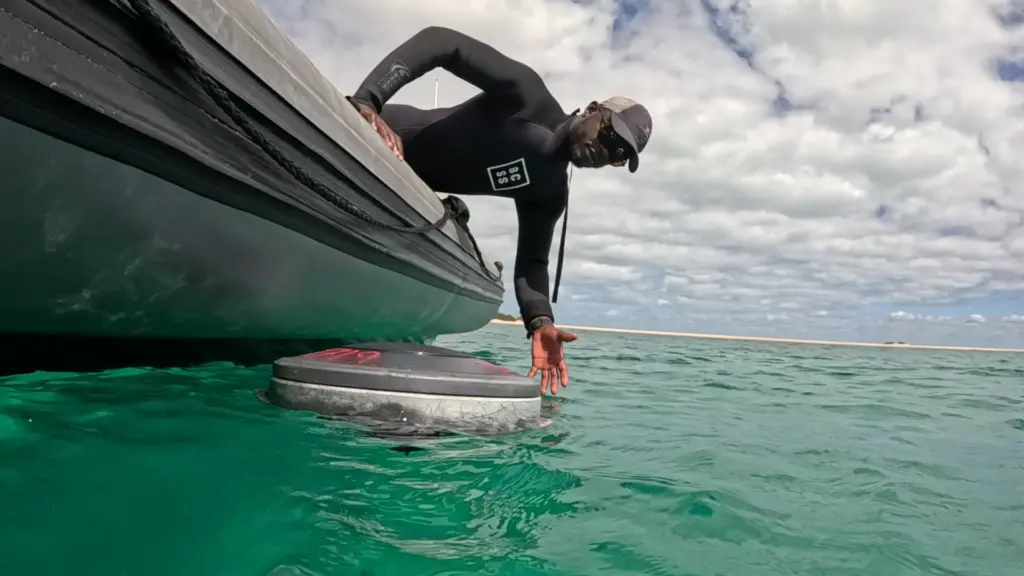
Fishing technology developed for the global tuna industry is being transformed into innovative marine monitoring infrastructure, opening new opportunities for conservation worldwide.
Scientists have demonstrated how satellite-connected fishing buoys can be repurposed to monitor marine ecosystems, in a pioneering study published in Scientific Reports.
The research, led by the Bazaruto Center for Scientific Studies (BCSS) Ocean Observatory in partnership with Spanish ocean-technology companies Satlink and Universal Plastic, provides a proof of concept for transferring industrial technology into marine conservation.
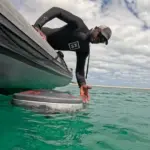
More than 20 recovered buoys were refurbished and deployed across Mozambique’s Bazaruto Archipelago during June and July 2025. Monitoring reefs, seamounts and other habitats, their echosounders generated 393 acoustic records, revealing nighttime signals 20–40% stronger than daytime readings.
Dr Mario Lebrato, lead author and BCSS chief scientist, said: “We are taking instruments developed to locate fish for the commercial tuna industry and demonstrating how that same technology can help us observe, understand and ultimately protect marine ecosystems.”
The initiative builds on Project ReCon, Satlink’s circular-economy programme, which recovers and repurposes end-of-use fishing equipment. Operating across 25 countries and territories, the programme aims to prevent marine waste while extending the useful life of sophisticated technology.
Kathryn Gavira, Satlink’s head of science and sustainability, said the project demonstrated how fishing technology could ‘serve a wider purpose and contribute to ocean knowledge as a whole’.
Researchers believe networks of repurposed buoys could eventually complement research vessels, satellites and underwater sensors, providing more frequent and geographically distributed environmental observations. Potential applications include assessing marine protected areas, measuring restoration outcomes and supporting conservation investment.
The study’s acoustic signals were not independently calibrated to absolute fish biomass or individual species, meaning further research and longer deployments are needed.
Universal Plastic is also exploring additional sensing capabilities to monitor plastic pollution. Its chief executive, Alvaro Bravo, said: “By connecting data on pollution, marine life and ocean conditions, we can better understand where ecosystems are under pressure and where action could make the greatest difference.”
Related Articles
 AQUACULTURE
 AQUACULTURE
 SEAFOOD