



Hatch Blue identifies US aquaculture opportunities
A new Hatch Blue report highlights regulatory uncertainty, financing gaps and market development as key barriers to US aquaculture investment
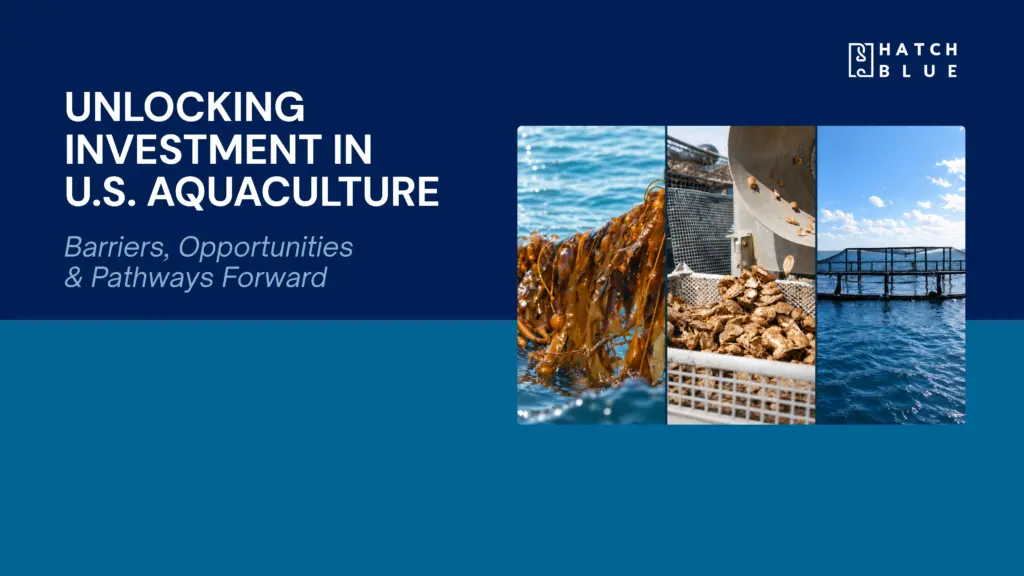
Hatch Blue has published a report examining barriers to investment in US aquaculture, identifying commercial opportunities and outlining measures to help the sector attract capital and expand domestic production.
The report, ‘Unlocking Investment in U.S. Aquaculture: Barriers, Opportunities and Pathways Forward’, was developed with funding from the US Small Business Administration’s Growth Accelerator Fund Competition. It draws on interviews with founders, investors and industry stakeholders, alongside publicly available research, and examines five regional hubs: Hawaiʻi, Alaska, California, Maine and Washington.
“Through Hatch Blue’s work across the aquaculture industry, we have seen the importance of the US market firsthand, both as a source of innovation and entrepreneurship and as a major centre of investment capital,” said Georg Baunach, chief executive and co-founder of Hatch Blue.
Despite being one of the world’s largest seafood markets, the US imports an estimated 70–80% of the seafood it consumes, while domestic aquaculture production remains comparatively small. The report argues that attracting investment requires more than additional capital, highlighting the need for commercially viable businesses, reliable markets and predictable regulation.
Key barriers include uncertainty surrounding offshore aquaculture regulations, fragmented permitting processes, limited domestic production scale and a lack of investment exits. The report also identifies a mismatch between financing structures and the diverse needs of technology developers, producers and infrastructure projects.
Opportunities include aquaculture technologies, genetics, artificial intelligence, feed innovation and biotechnology, where US companies can target international markets. Shellfish businesses could benefit from premium positioning and regional branding, while seaweed growth may depend increasingly on downstream applications, including food ingredients, biostimulants and biomaterials.
Finfish opportunities are more selective, with potential for land-based production of high-value species near consumers. Offshore farming could offer greater scale, but remains dependent on regulatory progress and proven economics.
The report recommends aligning financing with business development stages, investing in processing and market infrastructure, and making regulatory processes more predictable. It also calls for aquaculture to be recognised as a contributor to domestic food production, employment and supply-chain resilience.
Related Articles
 AQUACULTURE
 AQUACULTURE
 AQUACULTURE