




600,000 tonnes in 2029: Mowi outlines growth plans
With its farming division expected reach the milestone salmon production volume of 500,000 tonnes this year, Mowi has presented plans for continued volume growth to 600,000 tonnes as well as further cost improvements of €300-400 million.
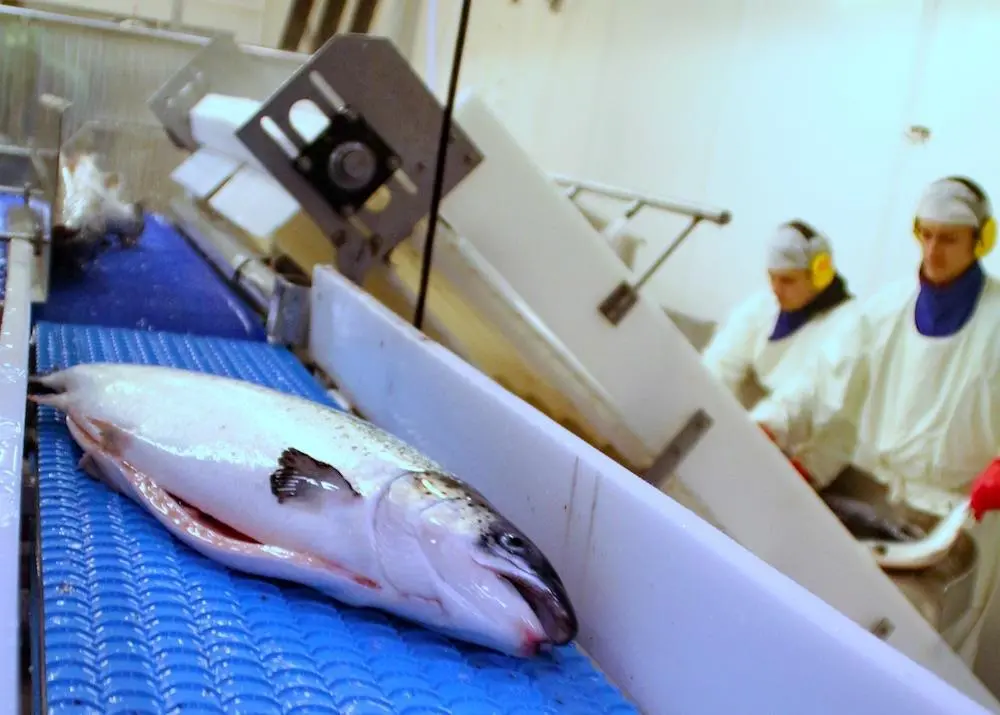
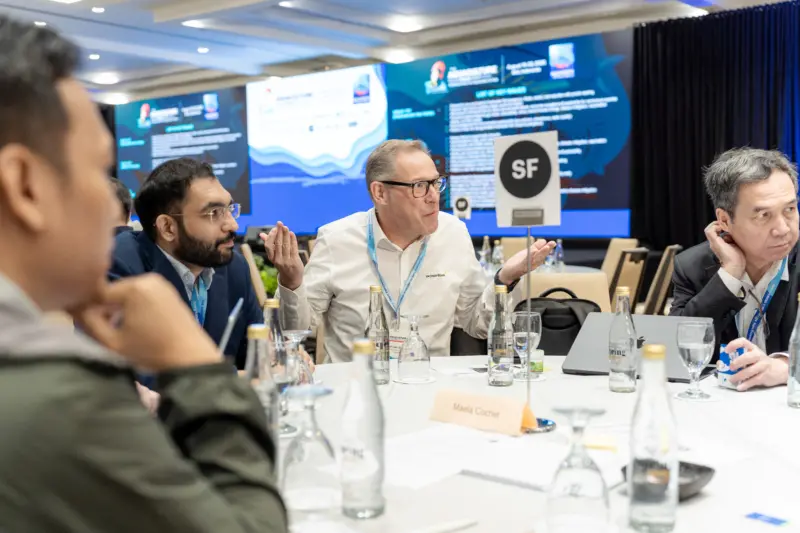
The world’s largest salmon farmer and value-added processer outlined these and other plans at its Capital Markets Day in Trøndelag, Norway.
“After reaching a milestone 500,000 tonnes of salmon harvested in 2024, we are now looking ahead to the next milestone of 600,000 tonnes, which we aim to fulfil in 2029,” Mowi CEO Ivan Vindheim said. “We will achieve this through better utilisation of license capacity, while also improving productivity and biological performance of existing production through our investment in post-smolt.”
The company was producing 375,000 tonnes of salmon as recently as 2018.
“We have grown faster than the rest of the industry in recent years, and our goal is to continue to do so in the future. By releasing more smolt and increasing our use of post-smolt we will be able to harvest 600,000 tonnes of salmon in 2029 thereby reinforcing our position as the world’s top producer of Atlantic salmon,” Vindheim said.
It was highlighted that continued growth in Mowi’s farming operations will in turn lead to growth in its two other divisions – Consumer Products and Feed.
“The rest of the supply chain will grow in line with farming going forward. To produce more salmon we need more feed, and more salmon means more raw material for our 20 secondary processing plants around the world,” Vindheim said
The company estimates revenue growth of 7-8% per year over the next five years, resulting in revenue of €8.5 billion in 2029, compared with €5.5 billion in 2023.
At the Capital Markets Day, it was explained that Mowi’s focus has been and will continue to be sea-based salmon farming and related technology, but also that it is closely observing developments in other technologies and is prepared to adopt new technologies as and when the time is right and they show themselves to be profitable.
Mowi is also looking to grow through selective acquisitions, provided they fit into the company’s operational strategy.
The company launched a cost improvement programme in 2018. Since then, it has saved over €300 million through 1,700 different initiatives.
“It is imperative for Mowi to be the cost leader throughout the value chain,” Vindheim said. “Today we are best or second best on cost in all the regions where we farm salmon, and we are also ahead in our downstream operations. However, in a world where our input costs are always increasing, and more and more is being demanded of us, we cannot rest on our laurels – cost improvements are more important than ever. We therefore plan to strengthen our position through a series of new measures, both biological and more general, through which we will cut €300-400 million in the next five years.”
In addition to the company’s post-smolt venture and the improvements in biological performance that it brings, Mowi’s digitalisation and automation strategy is also central to the company’s plans.
“We launched Mowi 4.0 in 2021 and since then have invested heavily in a range of measures to introduce greater efficiency and automation across our value chain. We are already seeing the positive impact this has had on sustainability, productivity and cost reduction, and we expect to reap further benefits in the years to come,” Vindheim said.
With regards to sustainability, it was noted that earlier this year, TIME Magazine listed Mowi as one of the 500 most sustainable companies for 2024. Mowi also emerged ahead of a strong field to be ranked the world’s most sustainable animal protein producer for the fifth consecutive year in the prestigious Coller FAIRR Protein Producer Index which assesses the sustainability performance of 60 of the largest publicly-listed animal protein producers
“Sustainability is a central theme all across Mowi’s value chain. That said, there is a particular focus on fish health and conditions in sea at this time. Mowi is investing heavily in post-smolt and Smart Farming solutions to improve fish health and survival rates,” Vindheim said.
The company maintains that the release of larger smolt to sea leads to increased productivity, higher survival rates and generally better fish welfare. As such, next year, 25% of Mowi’s smolt will be post-smolt. In the relevant regions in Norway as many as 50% of all smolt released will be post-smolt in 2025, rising to 75% by 2029.
“All indications are that releasing larger and more robust smolt to sea can increase survival rates by up to 50%, and reduce the number of lice treatments in certain areas by 40%,” Vindheim said.
Smart Farming also has a positive effect on fish welfare, according to Mowi’s CEO.
“We are continuing to roll out our Smart Farming concept in Norway, meaning we are able to monitor far more closely each salmon’s behaviour and wellbeing, and can implement more targeted measures much faster than in the past. With the large numbers of sensors now installed at our many farming sites up and down the coast, we now have enormous quantities of data at our fingertips giving us growing insight and knowledge of our salmon and the conditions in sea in real time.”
One of the factors underpinning the industry’s success is the high consumer demand for salmon, he said.
The megatrends that in part are driving demand are stronger than ever. The trend for healthy living, increasing demand for sustainable proteins and not least the unique universal appeal of salmon make our product the natural choice for a steadily growing number of consumers,” Vindheim said.
Mowi expects growth in demand for salmon to continue to exceed supply growth.
“We constantly strive to improve and develop our products to keep up with consumers’ changing habits and tastes. Through our MOWI brand we aim to transform the way salmon is sold. At the same time, it is important to recognise that salmon is still primarily sold as a commodity in a highly competitive market, and it is essential for us to be the cost leader downstream as well. Our Smart Factory concept is therefore extremely important for our more than 30 factories worldwide. Our target is to cut €60 million of costs in this part of the value chain in the coming years,” Vindheim said.
Related Articles
 AQUACULTURE
 SEAFOOD
 SEAFOOD