


Scientists to investigate effect of climate change on algal blooms
An international steering committee, under the banner of GlobalHAB, is looking to help fellow researchers understand how harmful algal blooms (HABs) affect human health and their impacts on industries, such as aquaculture, in a changing climate.
HABs are caused by certain microscopic algae, the ocean’s equivalent of grass on land, which are known to naturally produce biotoxins. HABs can occur when these particular algae grow quickly and reach high concentrations. They can deplete the oxygen in the water and some HAB-causing algae release toxins that are dangerous to animals and humans.
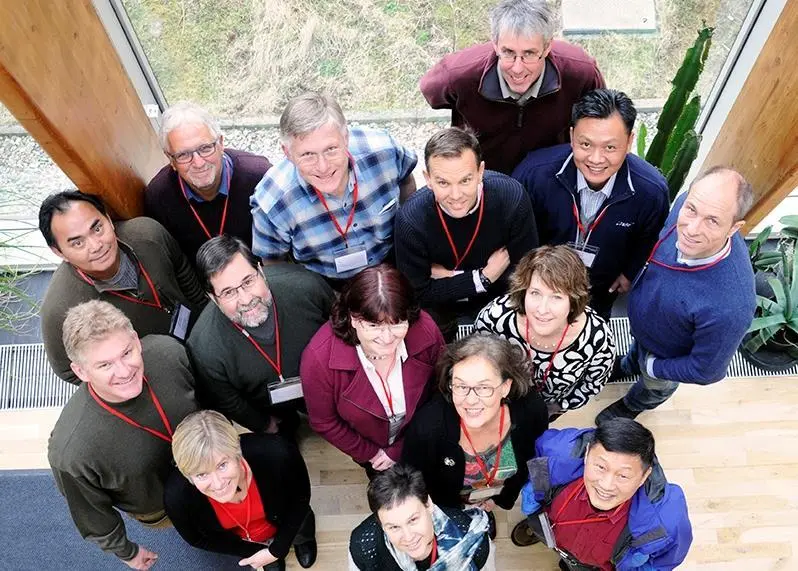
Microbial Ecologist Prof Keith Davidson, who represents the Scottish Association for Marine Science (SAMS) on GlobalHAB, said, “The steering committee comprises experts from a range of countries in Europe, Asia, Australia and North America. Their combined scientific expertise is relevant to many types of HABs and their impacts.
“There is a lot of independent HAB work going on throughout the world but this group will help the international scientific community and the society to have more collaborations and partnerships.”
Worldwide there are approximately 4,000 species of marine phytoplankton, approximately 300 of which have properties that make them harmful to humans. Toxins found in some shellfish can cause muscular paralysis, diarrhoea and sickness and even amnesia in humans.
GlobalHAB will follow on from work done by the GEOHAB project, which ran from 2000-2013. GlobalHAB will now outline the scientific priorities that researchers worldwide can use to help direct and co-ordinate their research. The project also aims to promote communication between scientists and society.
The project is sponsored by the Scientific Committee on Oceanic Research (SCOR) and the Intergovernmental Oceanographic Commission (IOC) of UNESCO.
Related Articles
 FISHERIES
 FISHERIES
 WORLD FISHING EVENTS